
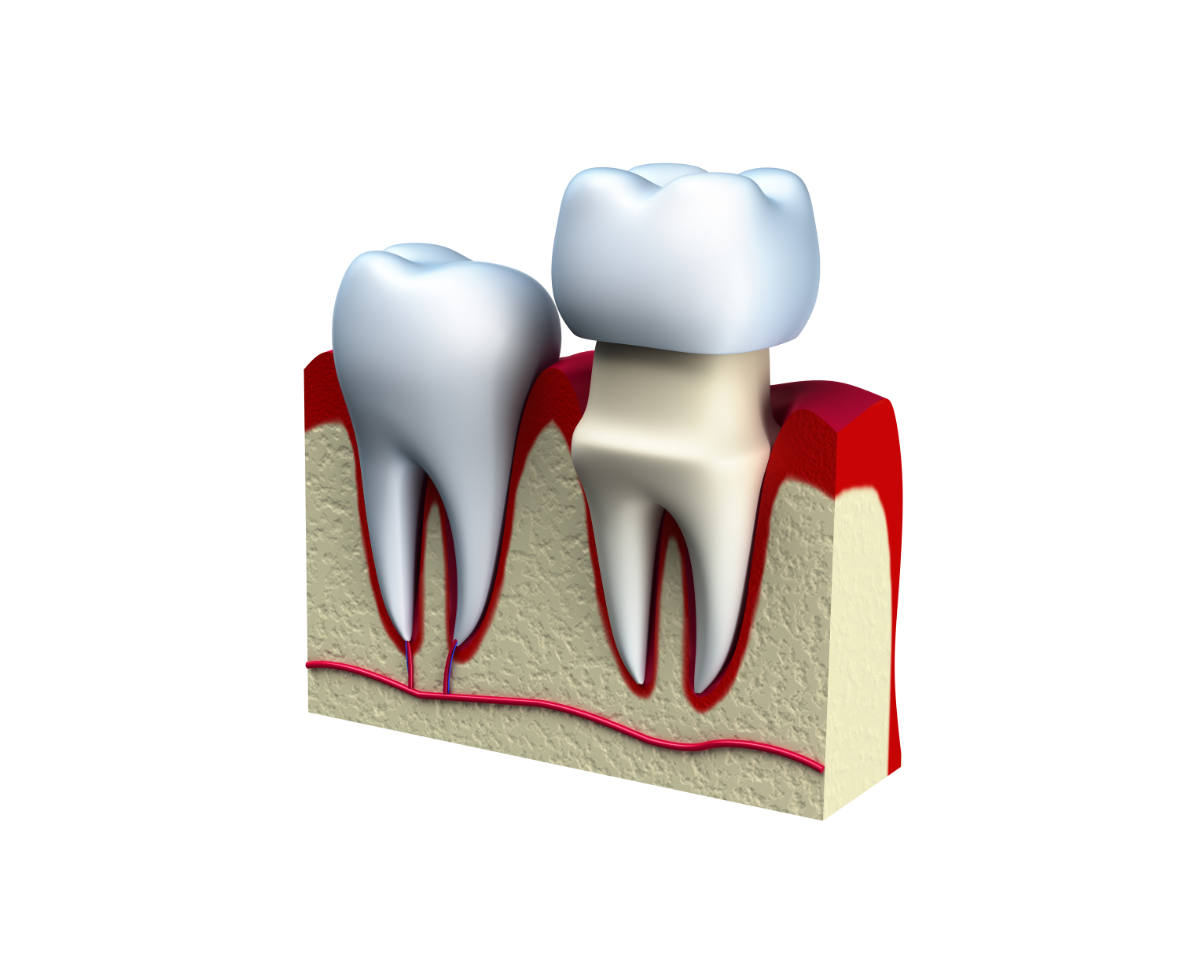
Dental Crowns
Tooth crown is needed when the tooth is badly damaged either by trauma or decay. Also, in the instance of a root canal treatment, a crown needs to be done to protect the tooth.
Significantly stronger than normal fillings, Inlays and Onlays, crowns protect teeth that otherwise may eventually break and become untreatable. Crowns cover the entire tooth surface and are made of Full Porcelain, Zirconia or Porcelain over Metal. With advances in materials and techniques, crowns can give you the strength, beauty and translucency of a natural tooth.
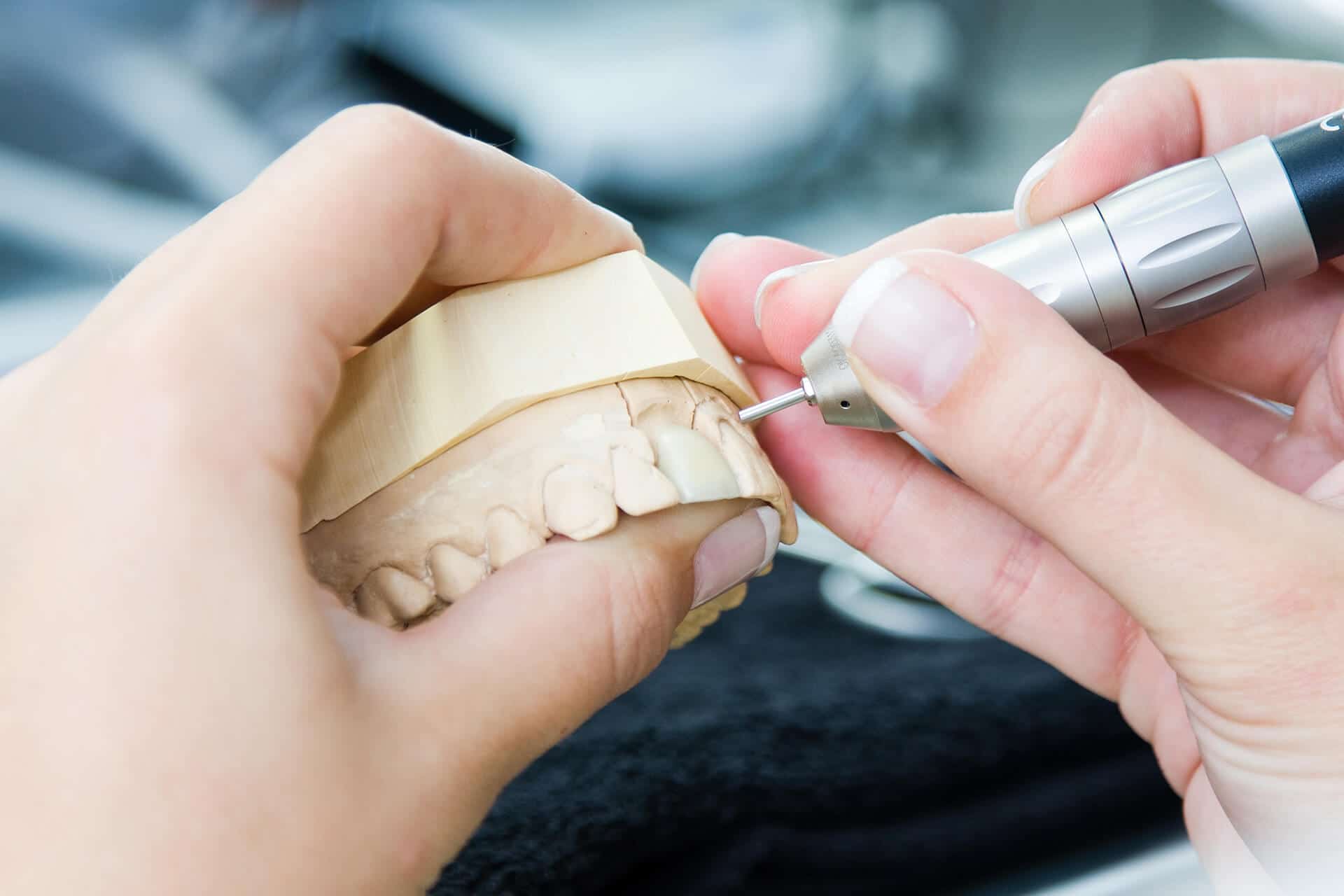
What Crowns Do For You
- Protect teeth that is too badly broken down and may break easily.
- Protect teeth that are cracked (Cracked Tooth Syndrome)
- Made entirely of Zirconia, which is strong and durable. In some cases, they may be used in place of Full Metal Crowns.
- Can be used to support and replace extremely worn-out or broken-down dentition.
- Crowns together with Dental Veneers, can be used in combination in Smile Makeover situations.
- Your dentist will select the most suitable material for the Crown that suits your aesthetic and functional needs.

Treatment Process
- Consultation appointment (Approximately 30 min)
Detailed examination and analysis of your occlusion (bite), to check for any parafunction (like night-grinding/clenching). - First appointment (Approximately 1 hour)
Prepare the teeth and take impressions for the crowns. - Your dentists will work with our in-house laboratory to fabricate the crowns for you.
- Second appointment (Approximately 1 hour)
Seating of completed crowns and permanently bonding them to the teeth. - Review of completed crowns.
FAQs on Dental Crowns
How much does this procedure cost?
At T32 our approach is to customise treatment for each individual. The cost will very much depend on each specific patients programme. We believe that, by doing this, we are able to ensure maximum value for patients as they are charged only for the treatment they need and not for general dental packages. This will eliminate any treatment or services not needed.
What are these tooth-coloured fillings made of and how safe are they?
Tooth-coloured restorative materials or composites are metal-free and are extremely safe. Most significantly, they do not contain mercury which is present in amalgam fillings. The latest composites have strength and even flexibility, similar to natural teeth.
Does removing existing silver filling from teeth hurt?
Depending on the size and depth of the cavity or filling, sensitivity may be experienced. Our dentists will relieve this by numbing the area to be treated.
How do I know if I am allergic to this new material?
Unlike allergy to metals, it is very rare to be allergic to composites.
Should I have amalgam fillings removed because they contain mercury?
At T32, we generally advise the removal of amalgam fillings when they are fractured or decayed, or when you desire a more aesthetically pleasing alternative. Should you have any health concerns about the mercury in amalgams, please discuss with our dentist during your consultation. We minimise your exposure to the mercury vapour released when removing the amalgam fillings; we do this by practicing effective barrier and evacuation techniques. This is done to ensure your comfort and safety.
Dental Bridges
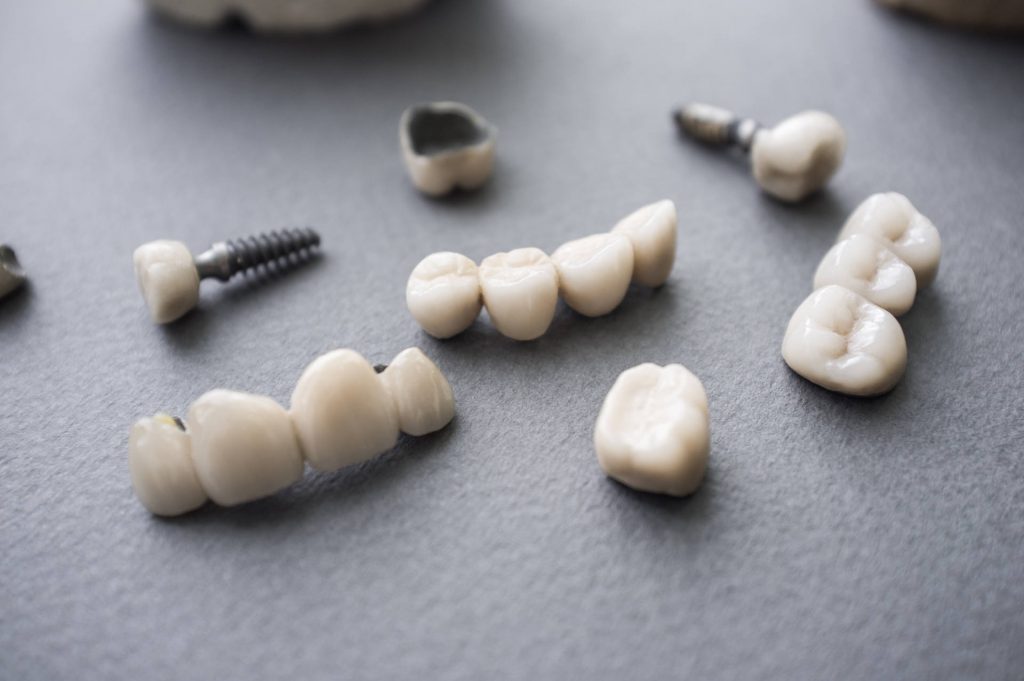
If you have an unsightly space due to missing tooth (teeth), Bridges can help to restore your smile and dental function. It is not only naturally pleasing, it can be long-lasting too.
Bridges cover the supporting teeth surface and missing teeth. They are made of Full Porcelain, Zirconia or Porcelain over Metal.
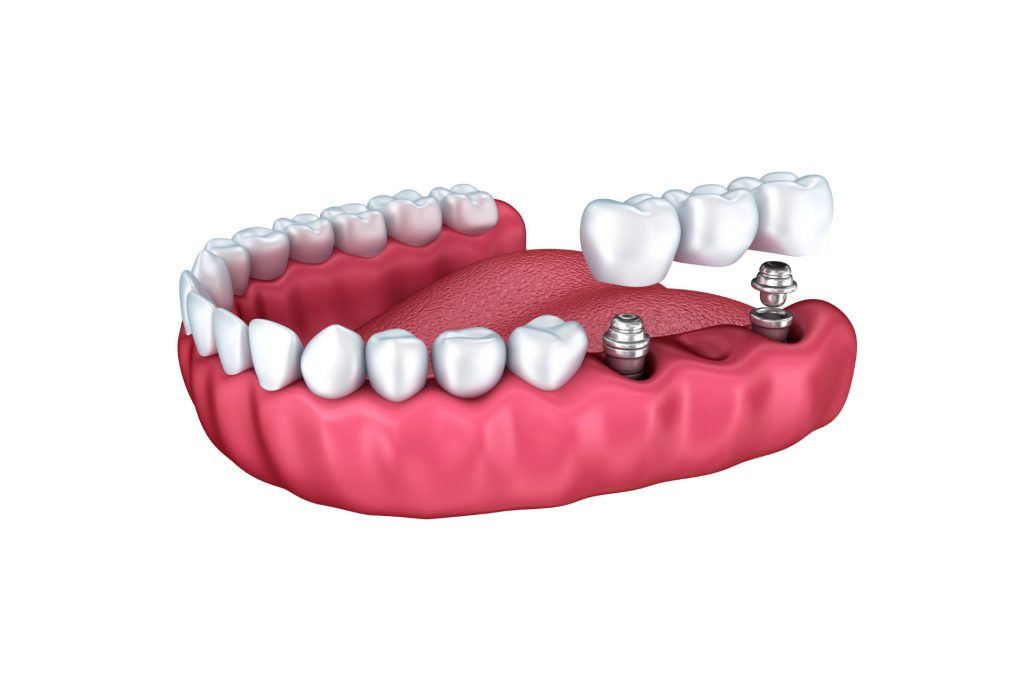
Benefits of Dental Bridges
- Helps to restore any unsightly gaps in your smile.
- Restores function so that you can eat confidently.
- Prevents shifting or drifting of neighbouring teeth (if left alone, teeth next to the space left by the missing teeth may shift.
- Bridges, together with crowns and dental veneers, can be used in combination in Smile Makeover situations.
- Your dentist will select the most suitable material for the bridge that suits your aesthetic and functional needs.

Treatment Process
- Consultation appointment (Approximately 30 mins)
Detailed examination and analysis of your occlusion (bite). To check for any parafunction (like night-grinding/clenching) - First appointment (Approximately 1.5 hours)
Prepare the teeth and take impressions for the bridge. After which our dentists will work with our in-house laboratory to fabricate the bridge for you. - Second appointment (Approximately 1 hour)
Seating of completed bridge and permanently bonding them to the teeth. - Review of completed bridge.
FAQs on Dental Bridges
What are all-porcelain bridges?
In the past, bridges were made with a metal support structure or a metal lining that was concealed by an external layer of porcelain. These looked unattractive and unnatural as the opaque metal base was often visible. With advances in dentistry techniques and materials, bridges can now be completely made of porcelain. Known as all-porcelain bridges, these have the translucency of natural teeth and look just like the real thing.
Why is a bridge necessary? Can't I just leave the gap as it is?
Leaving gaps untreated can lead to further deterioration of oral health, with gum disease and tooth decay more likely to occur in such situations. Furthermore, empty spaces may also have the undesirable effect of causing the teeth to shift out of their proper position. Most people find it hard to chew food properly and speak clearly when they have missing teeth. This can be solved by having a bridge.
How much does this procedure cost?
At T32 our approach is to customise treatment for each individual. The cost will very much depend on the specific patient’s programme. We believe that, by doing this, we are able to ensure maximum value for patients as they are charged only for the treatment they need and not for general dental packages. This will eliminate any treatment or services not needed.
How do I know if a bridge is the most appropriate type of treatment for me?
Our dental surgeons will carry out a detailed examination of your existing teeth, they will look for any empty spaces left by missing teeth as well as the condition of your gums. They will then make recommendations for appropriate procedures and advise you on treatment options.
How long does a bridge last?
With good oral hygiene, a bridge can last for at least ten years.
Can these bridges be taken out like false teeth?
Fixed bridges are cemented to your teeth and cannot be removed.
What about hygiene standards at T32 Dental Centre?
We understand the concern for personal safety. T32 Dental Centre uses autoclave sterilisation and disposable/non-contamination techniques to ensure that the highest hygiene standards are met.
Are all-porcelain bridges as strong as the old fashion bridges made of metal?
Yes, all-porcelain bridges when properly shaped to fit and securely attached are strong and durable.
What are the side effects of this procedure?
Some patients may initially experience mild sensitivity to extreme hot or cold temperatures in the mouth, this should however subside after a few weeks. If the condition persists, although unlikely, do speak with your dentist.
Does this procedure hurt?
Local anaesthesia is used to numb the gum before we start work on the area. This should minimise painful sensations.
I Want To Make An Enquiry/Appointment
Make An Enquiry/Appointment
Fill up the form with your particulars if you would like to learn more about our services.
I hereby give my consent to T32 Dental to send emails, SMS message, and/or call to my contact particulars provided herein